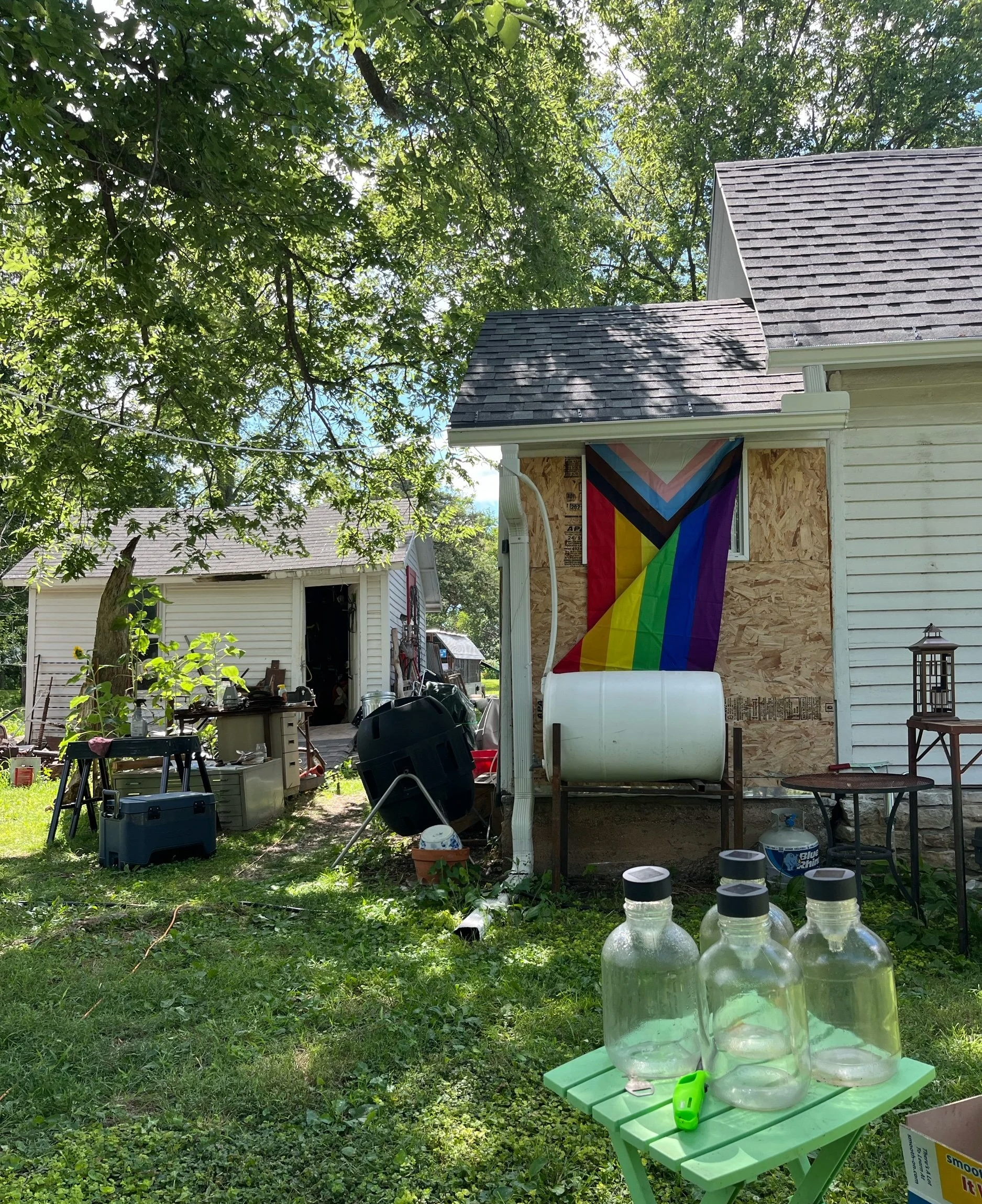
Rural landscapes are frequently depicted as sites defined by tradition, exclusion, or erasure, positioning queer identities as primarily urban phenomena. Yet rural queer lives persist, often through relational, embodied, and site-specific forms of presence that evade conventional documentation. My work seeks to explore these forms through site-responsive installations, material experimentation, and projected imagery, emphasizing the ways queerness is enacted, sensed, and sustained within rural spaces.
Materials function as both methodological and conceptual tools. Fabric, tanned hides, and other responsive surfaces absorb environmental shifts—light, wind, humidity—altering the legibility of projected images. These materials are not neutral; they carry histories of labor, attachment, and vulnerability, shaping the ways in which presence is perceived and experienced. By foregrounding contingency and responsiveness, the work situates rural queer presence as emergent, relational, and inseparable from its material and environmental contexts.
The work also engages with socio-cultural conditions that structure rural visibility. Pride flags, archival letters, and site-specific interventions highlight the negotiation of presence within spaces often marked by social precarity. In the Arkansas Ozarks, queer lives persist not through overt visibility alone but through relational networks, embodied practices, and traces embedded in landscape, architecture, and memory. These forms of presence challenge urban-centered models of belonging and documentation, revealing alternative modes of knowledge that are ethical, affective, and grounded in lived experience.
By situating queerness within materiality, environment, and relational experience, this practice models an arts-based research approach attentive to survival, memory, and speculative futurity. It demonstrates that even in contexts where visibility is constrained, queer lives persist—through materials, places, and the careful attention of both maker and viewer.